
Heavy electrons emerge at an atomic-layer interface
Direct observation of a heavy electron state opens a new route to designing quantum materials through their interfaces
| Journal | Communications Materials (2026) |
|---|---|
| Title | Interfacial heavy fermion formation in a two-dimensional Kondo lattice YbCu2 on Cu(111) substrate |
| Laboratory | Photophysics Laboratory〈Prof. KIMURA Shin-ichi〉 |
A research team led by the University of Osaka has directly observed an unusual heavy-electron state forming at the boundary between a one-atom-thick material and a metal for the first time. Such states are closely linked to exotic quantum phenomena, including unconventional superconductivity, and the finding opens new possibilities for designing quantum materials through their interfaces.
The researchers created a high-quality, one-atom-thick layer of ytterbium–copper (YbCu2) on a copper crystal and examined how electrons behaved across the interface using intense synchrotron light. Their measurements showed that electrons localized in the atomic layer interact with mobile electrons in the underlying copper to form the heavy-electron state.
The measurements revealed two distinct heavy-electron states. One was confined mainly to the two-dimensional YbCu₂ layer, while the other extended into the three-dimensional copper substrate. Crucially, the latter arose from hybridization between localized Yb 4f electrons in the atomic layer and mobile conduction electrons in the underlying copper, providing direct evidence of an interfacial heavy-fermion state.
“This achievement was made possible by our continued efforts to create high-quality materials and measure their electronic states as precisely as possible,” says senior author Professor Shin-ichi Kimura. “Our next goal is to engineer and control such heavy-electron states, opening the way to previously unexplored quantum states, including unconventional superconductivity.”
The findings suggest that carefully combining atomic layers and substrates could provide a new approach to designing quantum materials. By precisely controlling interfacial structures, electronic orbitals, and moiré patterns, researchers may be able to create and tune new low-dimensional quantum phenomena that cannot be realized in conventional materials.
Abstract
The exchange interaction between a local magnetic moment and itinerant carriers mediated by the Kondo effect is the origin of strongly correlated quantum phenomena. The concept of an interfacial Kondo lattice, exemplified by the moiré Kondo lattice, provides a powerful platform for exploring quantum critical phenomena such as non-Fermi-liquid behavior and unconventional superconductivity in low dimensions, owing to the high tunability and sensitivity of its physical parameters. However, direct observation of interfacial heavy fermions (HF) has remained elusive due to the lack of suitable candidate systems. Here, we present momentum-resolved evidence of interfacial HF formation between a rare-earth-based two-dimensional (2D) Kondo lattice, YbCu2, and a noble-metal Cu(111) substrate, obtained using high-resolution synchrotron-based angle-resolved photoemission spectroscopy. Momentum-resolved measurements unambiguously reveal interfacial HF states arising from hybridization between the Cu(111) metallic band and the Yb 4f orbitals in the topmost YbCu2 layer. Our experimental results establish an alternative degree of freedom for fabricating artificial Kondo lattices in low-dimensional systems.
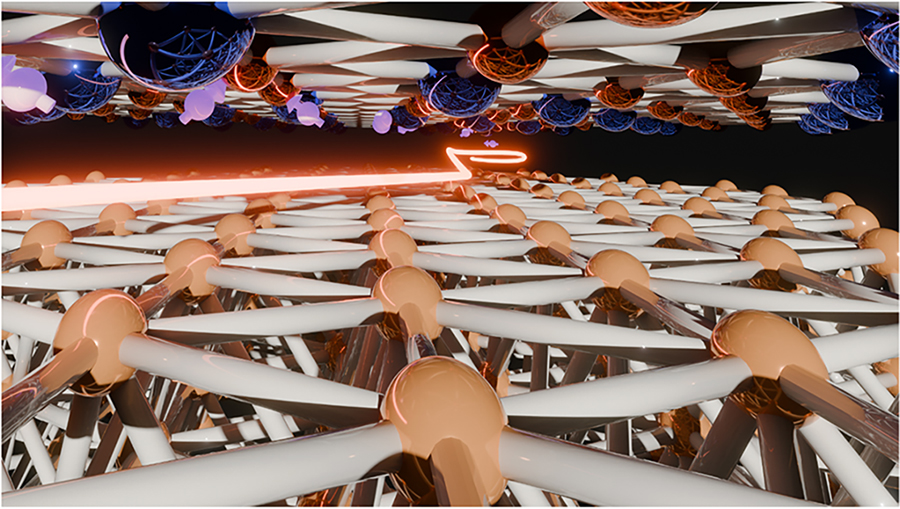
Fig. 1 Image of heavy fermion at interface
| Authors | Takuto Nakamura (1, 2), Hiroki Sugihara (2), Toshio Miyamachi (3, 4), Yitong Chen (2), Kaito Nishihara (2), Ryo Ichikawa (2), Hiroka Yamaguchi (2), Ryu Yukawa (5), Kiyohisa Tanaka (6), Yuri Hasegawa (7), Yoshiyuki Ohtsubo (8), Fumio Komori (3, 4, 9), Shin-ichi Kimura (1, 2, 6)
|
|---|


